![Get [ your home ]](https://howto.getyourhome.pro/wp-content/uploads/2025/10/cropped-How_to_GET_.webp)
![Get [ your home ]](https://howto.getyourhome.pro/wp-content/uploads/2026/01/How_to_GET_dark.png)
You’re staring at five brutal trends: February 2026 average prices cratered to $887,000—down $103,000 year-over-year and $13,000 monthly—while active listings exploded 114% to 1,660 units, creating a seven-month supply glut that’s pushing days-on-market to 38-45 versus the GTA’s 25, forcing properties to trade at 93-97% of asking with systematic 8-12% discounts now standard, and interest rates hovering around 2.25% are reshaping affordability landscapes but can’t overcome the fundamental oversupply-driven correction that’s shifted all negotiation power to buyers who understand these mechanics well enough to exploit seller vulnerability before stabilization arrives.
Educational disclaimer (not financial, legal, or tax advice; verify for Ontario, Canada)
Before you make any decisions based on this analysis, understand that nothing here qualifies as financial, legal, or tax advice—these are market observations drawn from TRREB, MLS Systems, and regional databases covering Brampton’s January 2026 sales activity and February 2026 conditions.
These observations are not personalized guidance tailored to your balance sheet, legal position, or tax situation. Brampton housing trends fluctuate with interest rate shifts between 2.25%-4.45%.
Brampton market update figures reflect snapshot data from early February requiring real-time verification.
Brampton real estate data showing 10.4% year-over-year price drops demands interpretation through your specific mortgage qualification, down payment capacity, and household income stability—none of which this statistical overview addresses. Market performance varies by property type, requiring you to assess whether detached homes, semi-detached homes, townhouses, or condo apartments align with your specific investment criteria.
If you plan to finance your purchase, review Ontario mortgage broker licensing requirements to ensure you work with FSRA-regulated professionals who can guide you through available financing options.
Consult licensed Ontario real estate lawyers for contract implications, certified accountants for principal residence exemptions and capital gains calculations, and qualified financial advisors for risk assessment aligned with your investment horizon.
Quick Takeaway:
Brampton’s housing market isn’t softening—it’s collapsing in slow motion, and if you’re standing on the sidelines waiting for a gentle dip, you’ve already watched prices plunge 10.4% year-over-year while inventory swells to 1,660 active listings and sellers bleed negotiating power with every passing week.
This Brampton market update reveals detached homes averaging $1 million after an 11% decline, townhouses dropping from $926,000 to $816,000 for four-bedroom units, and one-bedroom condos cratering 18% to $373,000—none of which signals stabilization when months of inventory hit seven and properties languish 45 days on market.
The Brampton housing market favors buyers who understand negotiation bargaining power, not optimists hoping Brampton property trends reverse without fundamental demand shifts, because sale-to-list ratios at 93-98% confirm sellers capitulating, not recovering. Savvy buyers are now channeling their energy into home renovation shows to visualize how purchased properties can be transformed into dream homes rather than obsessing over pre-sale conditions. Recent transactions prove the volatility, with 66 Millstone Dr selling above asking at $701,000 while 50 Luminous Crt closed $K below asking at $670,000—both within a 17-hour window that exposes how unpredictable pricing has become.
Current Brampton market trends
What separates a correction from a collapse isn’t velocity—it’s whether sellers regain pricing power before inventory suffocates the market. Brampton’s January 2026 data at $882,710 average home price (down 10.4% year-over-year) suggests the latter, particularly when you’re staring at 940 new listings flooding a 28-day window, nearly 1,000 active listings competing for attention, and a 64.4% inventory spike across Peel Region.
That’s transformed this into a designated buyers market where properties languish 38 days before closing. This brampton market update contradicts the optimistic narratives circulating through discount brokerages because brampton real estate trends now favor negotiation bargaining power heavily tilted toward purchasers. First-time buyers are concentrating their search on townhomes in the $600,000 to $700,000 range, while move-up buyers target detached homes between $800,000 and $1,050,000, with semi-detached homes positioned to see the strongest demand and sales activity this year.
With sale-to-list ratios hovering between 93-97% for detached homes—meaning you’re watching systematic price erosion rather than temporary softness. Understanding these Canadian market trends requires examining regional data beyond isolated municipal statistics, as CREA’s national price mapping reveals how local conditions fit within broader provincial patterns. Any credible brampton market analysis acknowledges this inventory-to-demand imbalance isn’t resolving quickly.
Month-over-month changes
While year-over-year comparisons tell the dramatic story, month-over-month movement in Brampton’s housing market reveals the velocity of deterioration—and January’s 1.2-2% average home price decline translating to roughly $13,000 evaporated equity in a single 30-day cycle should concern anyone holding property or contemplating purchases without understanding the trajectory.
This Brampton market update exposes the dangerous acceleration: average home price movement from $900,000 to $887,000 occurred while new listings surged 64.4% to 932 units, creating catastrophic inventory and market activity imbalances that guarantee further compression.
You’re watching sellers panic-list into weakening demand—transactions dropped 8% despite dramatically increased supply—which means the $13,000 monthly erosion isn’t an anomaly but a structural condition that’ll persist until inventory clears or buyers materialize with substantially improved affordability conditions neither currently exists. Properties now languish for 38 days average before finding buyers, extending carrying costs and forcing sellers into progressively weaker negotiating positions as time compounds their desperation. The deteriorating ownership market hasn’t improved conditions for renters either, as Canadian rental markets continue experiencing their own affordability pressures that prevent potential buyers from saving adequate down payments.
Buyer and seller strategies
- Pre-approval strengthens negotiation positioning, allowing aggressive discount requests without financing uncertainty undermining credibility.
- Target neighborhoods like Bramalea ($900K average) where price reductions exceed citywide trends, maximizing downward pressure.
- Extended days-on-market signal seller vulnerability—properties exceeding 45 days warrant 8-12% below asking offers.
- Consider street-level value differences within the same neighborhood, as properties on certain blocks command premiums based on lot orientation, school proximity, and infrastructure access that impact negotiation leverage.
- Before finalizing offers, verify flood zone classification with insurers, as properties in high-risk areas may face mortgage approval challenges or require additional coverage that affects affordability calculations.
Price and inventory analysis
Brampton’s residential market has entered a pronounced correction phase that’s stripping approximately 10% annually from property values, and if you’re waiting for some miraculous reversal based on historical patterns, you’re misunderstanding the structural forces at play.
This Brampton market update reveals housing inventory climbing 19.6% through 2025 while sales transactions plummeted 12.9%, creating textbook oversupply conditions that sellers can’t negotiate away through wishful listing prices.
Price depreciation hits hardest in condos, where one-bedroom units collapsed 18% to $373,000. Yet two-bedroom condo inventory surged 19% month-over-month to 127 active units, meaning you’re competing against desperate sellers who’ve already watched equity evaporate.
Detached homes averaging $1 million represent 11% annual declines, with larger properties accepting 93% of list price, because buyers recognize influence when inventory expansion outpaces demand by double-digit margins. International student buyers face additional complexity navigating property purchase exemptions that require full-time enrollment, specific residency requirements, and properties under $500,000 CAD. Bramalea stands out with homes at $850,000, positioning this neighborhood as the most accessible entry point for purchasers seeking Brampton opportunities.
Educational disclaimer (not financial, legal, or tax advice; verify for Ontario, Canada)
Before you treat anything in this analysis as actionable financial guidance, investment counsel, or legal direction—which it categorically is not—understand that real estate commentary carries zero professional liability because it doesn’t create fiduciary relationships, doesn’t constitute formal advice, and absolutely doesn’t replace the licensed professionals you’ll need when you’re signing purchase agreements or filing tax returns in Ontario.
This educational disclaimer exists because Ontario regulations distinguish sharply between market observation and licensed professional services, meaning you can’t substitute trend analysis for a lawyer reviewing title defects, an accountant calculating capital gains implications, or a registered advisor structuring investment portfolios. Brampton landlords of 1–4 residential units must obtain a Residential Rental Licence before January 1, 2026, a compliance matter requiring legal verification independent of market commentary.
Co-ownership structures such as joint tenancy or tenancy in common create distinct legal obligations and vulnerabilities that require independent legal advice before finalizing any shared property agreements in Ontario.
Real estate advice from unlicensed sources—however accurate the data—remains fundamentally informational, requiring independent verification through credentialed experts before you commit capital, sign contracts, or make irreversible legal decisions in Ontario’s property market.
Market information only
When you’re analyzing February 2026’s Brampton data, you’re looking at market information—raw numbers stripped of predictive guarantees, devoid of personalized recommendations, and entirely separate from the actionable advice your lawyer will draft into conditional clauses or your accountant will structure into tax-deferment strategies.
This Brampton market update quantifies what happened, not what’ll happen; this Brampton market analysis describes inventory levels and sale-to-list ratios without prescribing whether you should list aggressively or lowball sellers.
Your Brampton monthly market report functions as observational infrastructure, establishing that 940 listings entered circulation, 248 sold, and prices declined 10.4% year-over-year—facts that become decision inputs only after your licensed professionals contextualize them against your financial position, risk tolerance, and contractual obligations, none of which generic data addresses. Current elevated interest rates near 4.45% represent another data point requiring professional interpretation within your specific borrowing capacity and long-term financial commitments. CMHC housing market data provides standardized metrics on Canadian real estate trends that offer national context for local patterns but require localized interpretation to account for Brampton’s specific supply-demand dynamics.
Overview: Brampton market this month
February 2026 landed in Brampton with 940 new listings flooding a market that moved only 248 properties. Establishing a sales-to-new-listings ratio of roughly 1:4, this confirms that this isn’t a seller’s fantasy anymore—it’s a buyer’s negotiating playground.
Detached homes sit for 36 days on average, while sellers watch their properties trade at 93-97% of asking price depending on bedroom count. The $887,000 average home price represents a 10.4% year-over-year collapse that erased roughly $103,000 in nominal value since February 2025. Market inventory reached 5.6 months as absorption rates continue deteriorating under mounting supply pressure.
These Brampton real estate trends expose a structural imbalance that won’t correct overnight. Your Brampton market update demands recognizing that 4.45% interest rates combined with nearly 1,000 active listings create mathematical pressure sellers can’t negotiate away. Buyers with non-traditional income streams—from contract IT workers to content creators—face additional scrutiny as lenders now require two years of CRA filings showing consistent Line 150 income before approving mortgages in this softer market.
This Brampton market analysis strips away optimism—inventory absorption won’t materialize through wishful thinking when supply quadruples demand.
Key market shifts
While most market corrections unfold gradually across quarters and give participants time to adjust their expectations, Brampton’s residential real estate collapsed with surgical precision in early 2026.
Brampton’s housing market didn’t gradually decline—it collapsed with surgical precision in a matter of weeks.
The average home price dropped to $887,000—a figure that represents not just a 10.4% year-over-year decline but a complete erasure of $103,000 in nominal value since January 2025.
When you layer in the $13,000 month-over-month drop from December’s $900,000 average, you’re witnessing a quarterly decline of 5.5% that sped up rather than stabilized.
This Brampton market update reveals a price correction amplified by 940 new listings flooding the system within 28 days, creating a 64.4% inventory spike that triggered an immediate market balance shift.
You’ve now got approximately 1,000 active listings competing for 266 buyers who actually closed transactions, down from 355 last January.
Buyers navigating this correction should prepare for income verification requirements that now routinely include the last two years’ tax documentation, recent paystubs, and direct employer confirmation calls—processes that can delay pre-approval by several weeks if documentation isn’t organized upfront.
The 5 key trends
Because Brampton’s residential market just demonstrated how $103,000 in home equity can vanish across twelve months while the rest of the GTA posted modest gains, you need to understand the five mechanisms driving this correction—and what they mean for your transaction timeline, negotiating position, and neighborhood selection.
First, inventory saturation—940 new listings competing against 248 monthly sales—creates a 60% supply-to-new-listings ratio that fundamentally reverses negotiating power.
Second, this Brampton market update reveals property-type divergence: 1-bedroom condos dropped 18% while detached homes fell 11%, demanding category-specific pricing strategies.
Third, the 4.45% interest rate compressed affordability thresholds to $3,600 monthly payments for sub-$900,000 properties.
Fourth, neighborhood price differentials ($850,000 Bramalea versus $1,000,000 Brampton West) create tactical entry points.
Fifth, extended 38-day market times eliminate urgency—critical intelligence for any serious Brampton real estate trends analysis or Brampton market analysis you’re conducting now.
Price movement trend
You’re looking at an average home price of $887,000 in January 2026, down from $900,000 the previous month, which means Brampton’s market has dropped a clean $13,000 in thirty days and sits firmly below that psychological $900,000 threshold that separates confident sellers from those who’ll actually negotiate.
The median sold price landed at $829,000 while the benchmark hit $858,900, and if you don’t understand why those three numbers matter differently—average captures outliers, median shows the true middle, benchmark reflects typical properties—you’re going to misread whether you’re overpaying or catching a deal.
Year-over-year, we’re down 10.4% overall with a 5.5% quarterly drop, so anyone telling you “prices are stabilizing” is technically correct in that they’ve stopped falling *as fast*, but stabilization at considerably lower levels isn’t exactly the victory lap some agents will spin it as. The broader GTA saw its average home price climb to $1,050,000, which puts Brampton’s $887,000 at a significant discount and explains why first-time buyers keep circling back to this market despite the recent declines.
Average and median prices
Brampton’s housing market has entered a decisive correction phase as of February 2026, with the average home price settling between $887,000 and $900,000—a figure that represents not merely a statistical snapshot but a fundamental repricing of what buyers are willing to pay in an environment where use costs money and speculative fervor has evaporated.
The median prices tell a starker story at $829,000, revealing that half the market transacts below this threshold, which matters because median prices strip away outlier distortions that inflate averages.
These Brampton real estate trends, sitting $263,000 below the GTA’s $1,150,000 average, expose the city’s persistent discount despite transit promises and intensification rhetoric.
Monthly volatility remains characteristic of the market, with recent fluctuations ranging from a +2.9% increase in November to a -2.4% decline the following month—swings that compress equity and punish mistimed entries.
This means you’re paying for potential that repeatedly fails to materialize while carrying debt through protracted corrections.
Inventory levels
You’re looking at 1,660 active listings in January 2026, which represents a staggering 214% surge from the 2023 baseline and a 114% leap from January 2024’s 775 units.
If you think this inventory explosion happened by accident, you’re missing the point—this is what a market correction looks like when overpriced sellers finally capitulate and flood the system simultaneously.
Nearly 1,000 properties are still sitting unsold as of early February, meaning the glut isn’t clearing despite the increased supply, and that tells you everything about buyer hesitancy when prices haven’t adjusted enough to match affordability constraints.
The distribution matters too: you’ve got 47 one-bedroom condos and 127 two-bedroom units active right now, alongside substantial detached and townhouse inventory.
This means competition isn’t just theoretical—it’s sitting there on MLS, forcing you to either price aggressively or watch your listing age into irrelevance.
Active listings analysis
As of early February 2026, Brampton’s inventory has swelled to 1,660 active listings—a 17% jump from the 1,419 properties sitting on the market in January 2025, and more than double the 775 listings recorded in January 2024. This means sellers who’ve been clinging to the notion that supply constraints will bail them out of pricing mistakes need to abandon that fantasy immediately.
This market analysis reveals a structural shift: when inventory levels expand this aggressively while absorption rates stagnate at 248 sales against 940 new listings over 28 days, you’re watching a buyer’s market consolidate with mathematical certainty. The market now offers over 1,629 properties across diverse price ranges, giving buyers unprecedented choice and negotiating leverage in a city where inventory scarcity once dictated terms.
The monthly inventory index of seven months confirms what should already be obvious—active listings aren’t vanishing through competitive bidding anymore, they’re accumulating because demand can’t keep pace with supply, and your pricing strategy must reflect this reality.
Days on market
You’re watching homes sit on the market for 36–45 days in Brampton right now, and that DOM figure isn’t some abstract statistic—it’s a direct measure of how much negotiating power you have, whether you’re the one selling or the one holding back offers.
The first two weeks determine everything, because once your listing crosses 14 days without serious interest, buyers start treating it like damaged goods, assuming something’s wrong with the price, the condition, or both.
If you’re a seller who thinks you can wait out the market while your home languishes at 60+ days, you’re not being patient—you’re hemorrhaging influence while buyers circle back with lowball offers, knowing desperation sets in when DOM climbs and comparable sales keep closing faster than yours.
Speed of sales
How long properties sit on the market tells you everything you need to know about negotiating power, and right now Brampton’s 45-day average in January 2026 represents a fundamental shift from the manic 2021-2022 period when homes vanished in days under multiple-offer warfare.
This Brampton market update reveals stark property-type variations: semi-detached homes languish at 48 days while townhouses move at 42, both substantially slower than the GTA’s 25-day average, making this Brampton real estate trends analysis essential for tactical positioning.
You’re looking at extended holding periods that increased active listings 8% despite new listings dropping 13% year-over-year, a contradiction that emphasizes absorption slowdown.
This Brampton monthly market report demonstrates that condos maintain competitive velocity as the accessible entry point, while sellers must finally abandon 2022 pricing fantasies and embrace measured market realities. The current 2.25% interest rate environment supports buyer affordability with monthly payments around $3,500 for a $900K home, fundamentally reshaping purchase power dynamics across Brampton’s neighborhoods.
Sales volume
You’re looking at 248 homes sold across Brampton in the last 28 days, which represents an 8% decline during the measured period and aligns with the broader national trend of 5.8% month-over-month contraction in January 2026.
This means transaction velocity has cooled substantially from the overheated conditions that defined 2021-2022.
This reduction in sales volume isn’t a collapse, it’s a recalibration toward balanced market conditions where buyers regain negotiating power instead of capitulating to bidding wars and waived conditions, which were the hallmarks of the peak years that distorted pricing mechanisms.
Lower transaction counts don’t signal market failure, they reflect normalization where properties move at realistic prices rather than speculative premiums, forcing sellers to confront the reality that urgency has shifted from their side of the table to yours.
Transaction activity
Brampton’s transaction activity collapsed by more than 8% compared to previous periods, and if you’re still operating under the assumption that buyers will flood the market the way they did in 2021-2022, you’re setting yourself up for disappointment—because the 248 homes sold during January 2026’s 28-day period tell a story of deliberate caution, not enthusiasm.
This Brampton market update reveals sales volume that’s fundamentally incompatible with aggressive seller expectations, particularly when you consider Brampton ranked only 8th among GTA’s fastest-selling areas, meaning seven other markets are absorbing inventory more efficiently than yours.
Transaction activity varies dramatically by property type—detached homes and condos aren’t moving at comparable rates—so blanket assumptions about “the market” will mislead you into pricing strategies that ignore category-specific buyer behavior. Recent sales within the last 20 days demonstrate price fluctuations around asking, with some properties selling $695,000 below asking while others closed at $955,000 above asking, indicating buyers are highly selective about which listings justify premium valuations.
Neighbourhood variations
You can’t treat Brampton as a monolithic market because neighborhood-level price variations swing by $400,000 or more depending on whether you’re comparing Northwest Brampton’s $807,550 median to Springdale’s $1.2 million average.
These gaps aren’t arbitrary—they’re driven by measurable factors like lot sizes, school ratings, transit access, and development timelines that create entirely different buyer pools. Bramalea’s $850,000 entry point attracts first-time buyers scraping together down payments, while Castlemore’s luxury estates pull in established families willing to pay premiums for privacy and customization.
This means your strategy must shift completely based on which micro-market you’re targeting. If you’re assuming Brampton moves uniformly, you’ll misread demand signals and either overpay in cooling areas or miss opportunities in emerging zones like Mount Pleasant. The market’s overall average house price sits around $1,011,915, representing a 4.3% year-over-year decline that creates negotiation leverage across most neighborhoods.
In Mount Pleasant, the upcoming Highway 413 and LRT extensions are already baking future appreciation into current prices for investors who understand infrastructure-driven value creation.
Area-specific patterns
While most real estate analyses treat Brampton as a unified market—presumably because aggregating data requires less intellectual effort than interpreting it—the reality is that neighbourhood-level price variations reveal fundamentally different competitive forces, affordability thresholds, and buyer positioning strategies that you’ll miss entirely if you’re relying on city-wide averages.
This Brampton market update exposes Brampton price stratification that matters: Bramalea’s $850,000 average creates a 7% discount versus Mount Pleasant’s $950,000, meaning you’re functionally shopping in separate markets despite sharing a municipal boundary.
Bram West’s $1,000,000 threshold places it 15% above Fletcher’s Meadow’s $875,000, and this Brampton market analysis demonstrates that sale-to-list ratios compress harder in premium zones—five-bedroom homes fetch 93% of asking in expensive neighbourhoods versus 97% in mid-range areas, reflecting demand stratification that city-wide statistics deliberately obscure.
##
Because price movements tell only half the story without understanding how quickly homes actually move and at what discount, the sale-to-list ratio becomes your most reliable indicator of negotiating power in Brampton’s current market.
This Brampton market update reveals stark differentiation across property types, and you’ll utilize this intelligence to extract maximum concessions:
| Property Type | Sale-to-List Ratio |
|---|---|
| 3-bed detached | 97% |
| 4-bed detached | 95% |
| 5-bed detached | 93% |
| Townhouses | 96-98% |
| Condos | 98% |
Larger detached homes hemorrhage negotiating strength, with five-bedroom properties surrendering 7% below asking—translating to $77,000 off a $1.1 million listing. Meanwhile, condos and townhouses maintain tighter ratios, reflecting continued investor interest despite broader Brampton real estate trends showing systematic weakness. This Brampton market analysis proves size amplifies buyer influence exponentially.
What this means for buyers
These sale-to-list ratios hand you negotiating ammunition that didn’t exist eighteen months ago, and if you’re not structuring offers at 93-97% of asking—contingent on property type and days-on-market—you’re leaving tens of thousands on the table through misplaced deference to sellers who’ve already absorbed the psychological shift from 2021’s bidding wars to today’s 38-day average market time.
This Brampton market analysis reveals negotiation power & price concessions embedded in every listing crossing the 38-day threshold, where seller desperation compounds with each additional week of carrying costs, property taxes, and mortgage payments on vacant homes. The plateau in mortgage rates after rapid hikes means you can now calculate monthly carrying costs with precision that was impossible during the volatility of 2023-2024, transforming financing approval from a moving target into a fixed tactical advantage during negotiations.
The Brampton market update confirms 940 new listings competing for finite buyer attention, creating mathematical certainty that aggressive offers will succeed—particularly on 5-bedroom detached homes achieving only 93% of list price, reflecting seller capitulation you’d be foolish not to exploit through tactical lowballing backed by comparable sales data.
Strategy adjustments
Your negotiation wins mean nothing if you’re deploying 2021 strategies in a market that’s structurally reset. The 10.4% year-over-year price decline to $887,000 isn’t a temporary dip—it’s a repricing event demanding recalibrated listing approaches, bidding thresholds, and property-type prioritization. These adjustments must account for seven months of inventory overhang and sale-to-list ratios that’ve collapsed from 105% to 93-97% depending on home configuration.
Brampton market update essentials requiring immediate operational shifts:
- Pricing strategy adjustments start 8-12% below inflated comps—the $29,000 benchmark-to-sold gap eliminates full-ask fantasies, particularly for two-bedroom detached units hemorrhaging 21% annually.
- Brampton market analysis confirms one-bedroom condos ($373,000, down 18%) are oversupplied traps—prioritize three-plus bedroom configurations where decline rates stabilize around 11%.
- 36-day market baseline means day 45 triggers mandatory repricing—940 monthly new listings against 241 sales demand proactive repositioning.
What this means for sellers
Seven consecutive months of inventory accumulation have inverted the seller’s playbook, and if you’re listing in Brampton expecting bidding wars or full-ask offers, you’re operating with a cognitive map from a market that no longer exists.
The seller’s market playbook is obsolete—bidding wars and premium offers have vanished in today’s inventory-saturated reality.
The 940 new listings flooding a system that’s absorbing only 241 monthly sales means your property isn’t competing against three comparable homes; it’s fighting for attention against nearly 1,000 active alternatives.
Buyers have reclaimed negotiating power, financing conditions are back on the table, and the sale-to-list compression to 93-97% has obliterated the pricing cushion that previously let you list high and negotiate down.
This Brampton market update demands ruthless honesty in pricing strategy because market inventory levels guarantee that overpriced properties languish.
Additionally, sale-to-list price ratios reveal buyers systematically underbidding by 3-7%, turning aspirational pricing into extended carrying costs and eventual capitulation.
Pricing and timing
Brampton’s February 2026 average home price of $887,000-$900,000 sits $250,000 below the GTA benchmark of $1,150,000, but that affordability gap won’t protect you from the mechanical realities of a market where 940 monthly listings chase 248 sales.
Pricing errors now compound into quantifiable financial damage—the sale-to-list compression to 93-97% for detached homes and 93-96% for townhouses means you’re not negotiating from a position of strength, you’re absorbing a 3-7% haircut before closing costs.
If you’re timing your list for spring based on historical patterns while February’s $13,000 month-over-month decline signals ongoing depreciation, you’re betting against momentum that’s already stripped 10.4% year-over-year and delivered an 11% detached home category collapse to $1 million average.
The Brampton market update demands aggressive pricing and immediate timing—not seasonal optimism.
Next month outlook
Unless you’re assuming March will spontaneously reverse February’s structural fluidity, you’re looking at a month where 3% sales growth won’t absorb the continued upward trajectory of new listings—940 monthly listings chasing 248 sales doesn’t resolve itself through marginal volume increases when the SNLR sits at 60% and DOM holds at 25 days.
Because that sales-to-new-listings ratio means sellers are still competing against each other while buyers continue deliberating for nearly a month before committing, and with inventory elevated and the BoC Prime Rate locked at 4.45% providing mortgage rate stability in the 5-6% range without dramatic adjustments, March perpetuates the buyer-favorable conditions that delivered February’s 93-97% sale-to-list compression for detached homes. The elevated interest rates around 5-6% continue to impact buyer affordability despite mortgage rate stability, reinforcing the deliberate decision-making patterns that characterize this buyer-driven environment.
This Brampton market update confirms sustained negotiation bargaining power, making this Brampton monthly market report critical for positioning decisions—this Brampton market analysis doesn’t suggest equilibrium’s arriving.
Trend predictions
Looking forward doesn’t require optimism—it requires arithmetic, and the arithmetic here confirms that Brampton’s real estate market trends aren’t reversing course in 2026 just because calendar pages turn. This Brampton market analysis projects continued depreciation through Q1 with stabilization thereafter, driven by persistent inventory saturation and elevated borrowing costs that won’t meaningfully decline before mid-year.
The Brampton price trajectory** points toward sub-$900K averages maintained through spring, with detached properties absorbing 11% corrections while townhouses mirror that decline. Supply expansion of 7% across GTA ensures buyer bargaining power persists, translating to 93-98% sale-to-list ratios** becoming normalized expectations rather than anomalies.
This Brampton market update clarifies that anticipating swift rebounds contradicts fundamental supply-demand mechanics—prices stabilize when absorption matches inventory, not before.
FAQ
Why do buyers expect market reversals to follow emotional timelines instead of mathematical ones? The Brampton market update reveals 5.6 months of inventory and a 28.4% sales-to-new-listings ratio, meaning you’re watching a gradual shift, not a dramatic collapse. Because markets move through absorption rates and price discovery mechanisms that unfold over quarters, not weeks.
Your frustration with “slow” price drops ignores how sellers retreat incrementally, testing lower thresholds until transactions clear. Which Brampton real estate trends demonstrate through the $103,000 year-over-year decline that didn’t happen overnight but through cumulative monthly adjustments.
Key mechanisms driving this Brampton market analysis:
- Inventory accumulation forces sellers into competitive pricing after listings stale beyond 60 days
- Interest rate sensitivity compounds with job insecurity, particularly in trucking-dependent sectors
- First-time buyers remain sidelined despite affordability improvements, waiting for psychological capitulation signals
- Overpriced homes continue to sit on the market while well-presented properties with realistic pricing gain traction
4-5 questions
How does someone determine whether Brampton’s 10.4% annual price decline represents a buying opportunity or merely the first stage of a prolonged correction? You’ll need to dissect the Brampton market update methodically, examining whether inventory’s surge from 775 to 1,660 units signals equilibrium or oversupply.
The Brampton real estate trends show 38-45 days on market alongside declining sales velocity—241 transactions versus 350 the prior year—which means sellers lack urgency to capitulate further. If you’re banking on “buying the dip,” consider that Brampton market analysis reveals sale-to-list ratios hovering near 93-97%, suggesting modest negotiation room, not distressed pricing.
The mechanism driving decline stems from inventory normalization, not catastrophic demand collapse, so expecting 2017-style appreciation requires dismissing mathematical reality about supply-demand equilibrium, which would be foolish.
Final thoughts
Brampton’s market sits at an inflection point where tactical patience beats impulsive action, whether you’re buying or selling, because the fundamentals—1,660 active listings, 38-day absorption rates, and 93-97% sale-to-list ratios—aren’t screaming urgency from either side.
Neither buyers nor sellers hold the upper hand—this balanced market rewards strategy over speed.
This Brampton market update reveals conditions that reward preparation over panic, with every Brampton monthly market report reinforcing that overpricing strategies fail spectacularly while lowball offers waste everyone’s time.
Your market analysis should recognize that 2026’s projected 3-5% appreciation isn’t *game-changing* wealth creation, it’s stabilization after correction, meaning buyers gain negotiating leverage without guaranteed windfalls and sellers maintain equity without commanding premiums.
The current equilibrium punishes emotional decision-making, whether that’s FOMO-driven overpayment or stubborn refusal to acknowledge that your neighbour’s 2021 sale price exists in a different economic reality than today’s transactional *environment*.
Printable checklist (graphic)
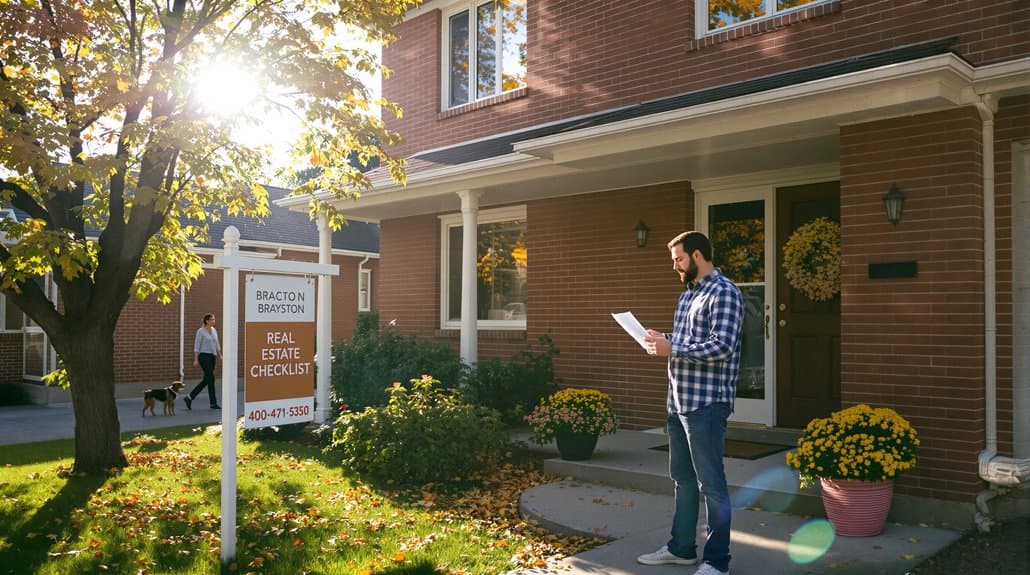
What separates competent market participants from floundering amateurs isn’t access to data—it’s the disciplined application of that information through systematic pre-transaction vetting.
This is why the checklist below distills Brampton’s current conditions into actionable verification steps that prevent the twin disasters of overpaying as a buyer or mispricing as a seller.
BRAMPTON MONTHLY MARKET REPORT VERIFICATION CHECKLIST
□ Confirm target property’s DOM against 38-45 day benchmark
□ Calculate offer at 3-7% below list (detached) based on current ratios
□ Verify comparable sales within 28-day window only—older data reflects different inventory conditions
□ Cross-reference asking prices against $829,000 median sold figure
□ Identify neighborhood-specific deviations from $887,000 average
□ Document seller concessions beyond price (inspection waivers, closing flexibility)
Your Brampton market analysis succeeds or fails on execution rigor, not wishful interpretation of Brampton real estate trends.
References
- https://wowa.ca/gta/brampton-housing-market
- https://www.youtube.com/watch?v=45VthdgjGNE
- https://rcibrealestate.ca/gta-real-estate-market-2026-2026-2/
- https://www.catherinenacar.ca/blog/brampton-real-estate-market-2026-2
- https://wahi.com/ca/en/housing-market/on/gta/peel/brampton
- https://www.insauga.com/average-sale-price-stays-under-900k-amid-2026-real-estate-market-surge-in-brampton-report/
- https://stats.crea.ca/en-ca/
- https://www.honestdoor.com/cities/on/brampton
- https://blog.remax.ca/brampton-housing-market-outlook/
- https://syg.ma/@aditya/brampton-homes-for-sale-complete-2026-buyer-guide
- https://rcibrealestate.ca/gta-real-estate-market-2026/
- https://bungalowfinder.ca/brampton-housing-market-forecast-2026
- https://www.youtube.com/watch?v=FkVm8ClA8Xg
- https://housesigma.com/on/market-trends/brampton-real-estate?municipality=10036&community=356&property_type=A.
- https://www.teamarora.com/top-realtor-in-brampton-who-parveen-arora/
- https://rcibrealestate.ca/first-time-home-buyer-ontario-2026/
- https://www.youtube.com/watch?v=LDu_BRnMrkI
- https://brampton.listing.ca/real-estate-price-history.htm
- https://manvirbasra.com/residential-landlord-playbook/residential-rental-licensing-pilot-program-2026-brampton/
- https://www.gsaroralaw.ca/blog.php?slug=the-2026-guide-to-legalizing-your-brampton-basement-apartment-requirements-zoning-and-safety