![Get [ your home ]](https://howto.getyourhome.pro/wp-content/uploads/2025/10/cropped-How_to_GET_.webp)
![Get [ your home ]](https://howto.getyourhome.pro/wp-content/uploads/2026/01/How_to_GET_dark.png)
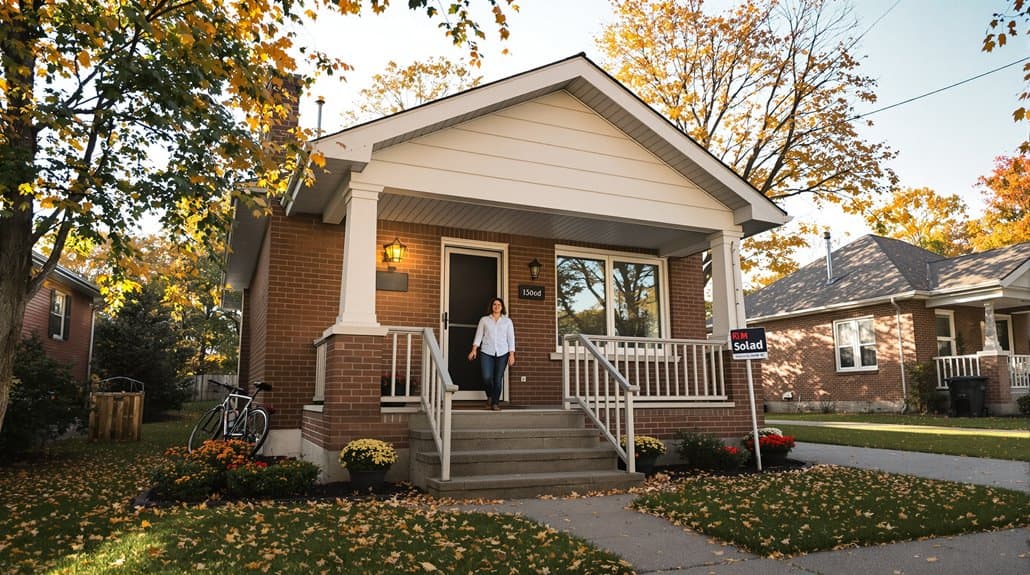
Start twelve months out by checking your credit score and calculating your debt-to-income ratio—because discovering you’re over the 44% DTI threshold two weeks before closing means you’re not closing at all. Open your FHSA immediately (it caps at $8,000 annually), begin aggressive debt reduction on high-interest balances, and verify that neither you nor your spouse owned property in the past four years, since spousal history alone disqualifies your land transfer tax rebate even if they’re not on title. The timeline below breaks down exactly when to gather documentation, when RRSP contributions must season, and how to sequence your deposits so you don’t forfeit tax advantages or trigger disqualification.
Educational disclaimer (not financial, legal, or tax advice; verify for Ontario, Canada)
Before you commit a single dollar to Ontario’s real estate market, understand that this timeline delivers information, not advice—because information describes what exists in provincial housing programs and mortgage mechanics, while advice tells you specifically what to do with your money, and the latter requires professional licensing I don’t possess.
This first-time buyer schedule outlines mechanisms like FHSA contribution limits and land transfer tax rebate thresholds, but whether you should optimize those mechanisms depends on tax brackets, risk tolerance, and financial circumstances only accountants and mortgage professionals can assess after reviewing your actual situation.
Treat this Ontario buying timeline as a research foundation, not a decision structure, and verify every referenced program detail with licensed advisors before executing transactions—because Ontario’s home purchase timeline involves legally binding contracts where misunderstanding one clause costs thousands. When working with mortgage professionals, confirm they hold valid FSRA broker licensing to ensure regulatory compliance and consumer protection throughout your transaction. Toronto residents navigating this process may encounter additional municipal rebates layered on top of provincial incentives, creating combined relief structures that require separate verification of eligibility criteria.
Not financial advice [AUTHORITY SIGNAL]
This guide won’t tell you how to spend your money because providing that direction crosses the regulatory line into financial advice, which requires licensing under Ontario’s securities law and federal mortgage broker regulations—and confusing general education with personalized recommendations is how first-time buyers end up following strategies that work brilliantly for someone in a different tax bracket, employment situation, or risk profile but collapse into expensive mistakes when applied to your actual circumstances.
Every first-time buyer schedule you’ll find online, including this one, presents a home buying timeline as generic structure, not as instructions tailored to your debt load, income stability, or whether your uncle’s tax trick actually applies to your situation.
The Ontario buyer steps discussed here describe what typically happens and why certain sequences matter—you still need licensed professionals to tell you what *you* should do. Understanding whether you meet the four-year ownership window is foundational to accessing Ontario rebates and incentives, but determining your actual eligibility requires examining both your and your partner’s complete property history with a qualified advisor. Before approaching lenders, familiarize yourself with the mortgage stress test requirements under Guideline B-20, which determine whether you qualify based on a rate higher than what you’ll actually pay.
Who this list is for
Unless you’ve never owned residential property anywhere in the world *and* you haven’t held ownership interest in any home during the past four years *and* your household income falls below the provincial thresholds that range from $90,600 in Brantford to $130,000 for households in Kingston, this timeline probably won’t deliver the financial advantages you’re expecting.
Because Ontario’s first-time buyer programs—both provincial land transfer tax rebates and federal incentives—define eligibility through hard cutoffs that don’t care about your intentions or how unfair it feels that owning a condo in 2021 disqualifies you in 2024.
This first-time buyer schedule applies strictly to Canadian citizens and permanent residents aged 18 or older who intend to occupy the property as their principal residence, meaning this home buying timeline excludes investment properties entirely. The property must serve as your primary residence, not a cottage, vacation home, or rental unit you plan to lease to tenants.
The first buyer process demands that couples meet joint eligibility requirements where either partner’s prior ownership can disqualify both. If your spouse owned a home while you were married—even if you weren’t on title—you won’t qualify for the land transfer tax refund regardless of your own ownership history.
Ontario first-time buyers
Ontario’s first-time buyer incentives layer provincial land transfer tax rebates, federal RRSP withdrawal programs, and tax-sheltered savings accounts into a stack that can theoretically deliver $28,475 in combined relief if you’re buying in Toronto at $400,000 with maxed FHSA contributions.
But the math gets uglier quickly once you cross certain thresholds because the provincial rebate caps at $4,000 regardless of purchase price, the Toronto municipal rebate stops growing past $4,475, and the federal programs like the Home Buyers’ Plan merely let you borrow from your future retirement rather than handing you free money.
The first-time buyer schedule demands understanding this tiered structure before setting your home buying timeline, since your actual benefit shrinks proportionally as purchase prices climb past $400,000, turning what looks like generous provincial support into marginal relief that barely covers legal fees on a $750,000 property. Outside Toronto, buyers face only provincial tax and avoid the municipal layer entirely, which means a $300,000 home in Sudbury results in zero land transfer tax after the rebate compared to dual taxation inside city limits. Proper sequencing matters because contributions need 90 days RRSP residency to retain tax deductions, and last-minute deposits before withdrawal risk double taxation that eats into your calculated savings.
12-month timeline [EXPERIENCE SIGNAL]
Because most first-time buyers in Ontario treat homeownership like an impulse purchase they can figure out along the way, they stumble into bidding wars with pre-approvals that expire mid-negotiation, discover their credit score disqualifies them from advertised rates three weeks before their lease ends, or realize too late that their 5% down payment leaves them with exactly zero dollars for the lawyer who needs $2,000 before closing.
You need twelve months, not because buying property requires mystical complexity, but because mortgage lenders demand documentation spanning three years of addresses, four months of investment statements, and credit histories clean enough to justify lending you six figures.
At twelve months out, you’re pulling credit reports and calculating whether your income supports the 32% housing-cost-to-gross-income ratio that determines approval, while simultaneously building separate accounts for your down payment and the $8,000–$12,000 in closing costs nobody mentions until you’re committed. This timeline also gives you space to gather home renovation inspiration for properties that need cosmetic updates, which can expand your options in competitive markets. This timeline provides a personalized roadmap that accounts for individual financial situations, local market conditions in cities like Oshawa or Ajax, and the regulatory requirements specific to Ontario property transactions.
The 12-month timeline
Months 10-11 demand financial documentation assembly and mortgage pre-approval completion, where you’re gathering employment verification letters dated within 30 days, tax returns spanning two years, and bank statements covering 90 days to satisfy underwriters who’ll reject your application for missing a single pay stub. Your employment letter must include your exact annual gross salary, job title, start date, and confirmation that employment is ongoing and likely to continue, all on company letterhead with an authorized signature from HR or management.
Months 7-9 allocate house hunting across 10-15 property viewings minimum, though competitive markets stretch this to 30+ homes and six months of weekend open houses. Your real estate agent, compensated by the seller rather than from your pocket, provides MLS access and arranges these viewings while advising on offer strategy.
Months 4-6 accommodate offer submission and the 5-10 business day conditional period for inspections and financing verification.
Months 2-3 complete final underwriting requiring 7-14 days.
Month 0-1 executes closing.
Month 12: Financial assessment
You’re a full year out from buying, which means you’ve got time to fix what’s broken instead of scrambling later when lenders reject you for easily preventable problems. Start by pulling your credit report from Equifax or TransUnion to see where you actually stand—not where you think you stand—because discovering a mid-500s score three months before house-hunting is how people end up paying thousands extra in interest or getting denied outright.
Once you know your credit reality, build a detailed budget that accounts for your current income, existing debts, and how much you can realistically save each month. If you’re self-employed, start organizing your Notices of Assessment and T1 returns now, since lenders typically require two full years of documentation and use income averaging to calculate your qualifying amount. This is also the time to confirm you meet first-time buyer status by verifying you’ve never owned a home anywhere in the world and haven’t lived in a property owned by a spouse or common-law partner in the past four years. Because lenders will calculate your borrowing capacity based on hard numbers, not aspirational thinking or vague hopes about future raises.
Credit check [PRACTICAL TIP]
Credit scores determine whether you’ll qualify for a mortgage at all, and if you do qualify, they’ll dictate how much your borrowing will actually cost you over two or three decades of repayment—which means checking your credit twelve months before you plan to buy isn’t cautious preparation, it’s the minimum timeline required to fix the problems you’re statistically likely to discover.
You need 680 minimum in Canada, though some lenders grudgingly accept 600 if you’re willing to pay higher rates or produce larger down payments. Even small differences in interest rates can significantly impact your loan costs over the full term of your mortgage.
Access your TransUnion report now through participating lenders at no cost, examine it for errors that shouldn’t exist but frequently do, and start building payment history if you’re thin on documented creditworthiness—because payment patterns take months to establish credibility, and last-minute improvements won’t register before your pre-approval assessment begins. B-lenders accept credit scores as low as 500 for fixed-rate mortgages and 600 for variable-rate products, though they charge rates 1.25% to 2% higher than prime and typically add lender fees of 1% to 2%.
Budget creation
The financial assessment you conduct twelve months before purchasing determines not just whether you’ll qualify for a mortgage but whether you’ll qualify for enough mortgage to buy anything worth owning in Ontario’s current market—and most first-time buyers discover, far too late, that their self-assessed “readiness” bears no relationship to what lenders will actually approve once they examine income documentation, debt obligations, and down payment sources under institutional scrutiny.
| Purchase Price | Minimum Down Payment | Closing Cost Range |
|---|---|---|
| Under $500,000 | 5% of purchase price | $7,500–$20,000 |
| $500,000–$1,499,000 | 5% first $500K + 10% remainder | $11,250–$60,000 |
| $1,500,000+ | 20% of purchase price | $30,000–$80,000 |
Calculate your DTI now—if it exceeds 44% with projected mortgage payments included, you won’t secure competitive rates regardless of income level. Lenders require employment history of 3 years as preferred verification when assessing income stability and mortgage qualification eligibility. Properties located in designated flood zones may require proof of flood insurance before mortgage approval, adding $1,200–$8,000 annually to your ownership costs and affecting your debt service calculations.
Month 11: Debt reduction start
You’ve assessed your financial position, and now you need to destroy your high-interest debt before any lender will take your mortgage application seriously, because carrying a $8,000 credit card balance at 19.99% APR while applying for a $400,000 mortgage signals to underwriters that you can’t manage money and you’ll default the moment property taxes come due.
The avalanche method isn’t a suggestion—it’s the mathematically most advantageous approach where you list every debt by interest rate, make minimum payments across the board, then throw every spare dollar at the highest-rate obligation until it’s gone, which saves you thousands in interest compared to the snowball method that prioritizes small balances and makes you feel good while bleeding money.
If you’re in Ontario and serious about homeownership in twelve months, you’ll simultaneously slash discretionary spending, pick up extra shifts to generate debt-crushing income, and explore consolidation options through your bank or credit union, but only if the new rate actually beats your current weighted average.
Because refinancing from 18% scattered debt into a 12% consolidation loan makes sense, while consolidating 8% car loans into a 10% personal loan makes you a financial illiterate. Before submitting multiple loan applications, understand that simultaneous hard credit checks from different lenders will damage your credit score, so insist on soft checks during your initial consolidation research.
Every dollar you eliminate from your monthly debt obligations directly improves your TDS ratio, which means paying off that $350/month car loan could increase your maximum mortgage qualification by $50,000 or more depending on your income.
Pay down strategy [CANADA-SPECIFIC]
With eleven months of preparation behind you, attacking debt becomes non-negotiable because mortgage lenders scrutinize your debt service ratios with algorithmic precision. Every dollar of monthly obligation you eliminate translates directly into increased borrowing capacity—typically at a 10:1 ratio where reducing $200 in monthly payments can boost your approved mortgage amount by $20,000 or more.
Your execution options:
- Debt Avalanche: List obligations by interest rate descending, maintain minimums everywhere, hammer the highest-rate account with surplus funds—credit cards averaging 19.99% deserve annihilation before you consider mortgage applications.
- Debt Snowball: Smallest balance dies first for psychological momentum, then roll that freed payment into the next target.
- Consolidation Loan: Personal loans or HELOCs offering single-digit rates collapse multiple payments into one manageable obligation. Access to over 90+ lenders ensures you’ll find refinancing solutions tailored to your specific financial situation and debt profile.
- Government Use: FHSA contributions provide tax-deductible deposits while RRSP Home Buyers’ Plan access unlocks $35,000 per person.
Credit optimization [BUDGET NOTE]
How effectively can you borrow when your credit file screams “financial chaos” to algorithmic underwriting systems that convert your payment history into binary approve/reject decisions in microseconds? Your credit score determines whether you’ll access prime lending or face rejection, and outstanding requires surgical precision across multiple dimensions simultaneously. Pay every bill on time without exception, because payment history constitutes the dominant weighting factor in scoring algorithms. Reduce outstanding balances to improve utilization ratios, targeting sub-30% on revolving credit. Pull your Equifax and TransUnion reports, dispute inaccuracies immediately, and halt new credit applications entirely—each inquiry compounds negative scoring pressure. If your score sits below qualification thresholds, consider delaying your home purchase to focus on credit repair, allowing time to address issues that alternative lenders would otherwise penalize with substantially higher interest rates.
| Credit Score Range | Lending Outcome | Rate Impact |
|---|---|---|
| 660+ | Standard approval | Outstanding rates |
| 600-659 | Alternative lenders | Premium rates |
| Below 600 | Probable decline | Subprime/unavailable |
Month 10: Down payment saving plan
You’re two months from the finish line, which means it’s time to stop vague “saving goals” and start executing a structure that actually works—opening a First Home Savings Account immediately if you haven’t already, since this vehicle lets you contribute up to $8,000 annually with both tax-deductible contributions like an RRSP and tax-free withdrawals like a TFSA, giving you dual advantages no other account offers.
If you’ve already maxed your TFSA or need additional firepower, you should simultaneously plan your RRSP Home Buyers’ Plan withdrawal strategy, because extracting up to $60,000 tax-free ($120,000 for couples) requires those funds to sit in your RRSP for at least 90 days before withdrawal, meaning you can’t just dump money in next month and expect immediate access. Remember that HBP funds must be repaid over 15 years, starting after the first two fiscal years post-purchase, so factor these future repayment obligations into your long-term budget planning now rather than treating the withdrawal as free money.
Most first-time buyers fumble this timing requirement or fail to open their FHSA early enough to capture maximum contribution room, leaving thousands in tax benefits on the table—don’t be one of them.
FHSA opening [EXPERT QUOTE]
The First Home Savings Account represents the most significant down payment vehicle Ontario’s first-time buyers have accessed in decades, combining RRSP-style tax deductions on contributions with TFSA-style tax-free growth and withdrawals—a dual benefit no other registered account offers.
But eligibility hinges on meeting Canada Revenue Agency’s precise first-time buyer definition at the moment you open the account, not when you ultimately withdraw funds. You qualify if you haven’t lived in a home you owned or jointly owned during the current calendar year or the preceding four years, a requirement that disqualifies you the instant you close on property. Your contribution room accumulates at $8,000 annually once opened, with unused amounts carrying forward indefinitely up to the $40,000 lifetime maximum.
This makes Month 10 your tactical opening window before purchase timelines compress dangerously. The spouse exception trips up countless applicants: if your partner owns property and you’re living together there, you’re ineligible regardless of title arrangements.
RRSP HBP planning
Canada’s Home Buyers’ Plan lets you raid your RRSP for down payment cash without triggering the tax massacre that normally accompanies early withdrawals, offering first-time buyers a $60,000 per-person extraction limit—$120,000 for couples who both qualify—that converts tax-deferred retirement savings into tax-free homeownership capital.
But Month 10 planning exposes the tactical minefield most buyers stumble through blindly. The 90-day contribution seasoning requirement means you’re already behind if you haven’t deposited RRSP funds by Month 7, since withdrawals require three months of account residency before extraction becomes permissible.
You’ll need written purchase agreements, Canadian residency proof, and a four-year ownership lookback that disqualifies anyone who’s owned and occupied a principal residence since January 1 of the fourth year preceding withdrawal, though disability tax credit holders bypass this restriction entirely. The property you’re purchasing must be occupied as primary residence within the first year of acquisition to maintain HBP eligibility.
Month 9: Pre-approval preparation
Month 9 marks the point where you transition from passive saving to active preparation, and that means assembling the documentation fortress lenders demand before they’ll even consider telling you what you can afford.
You’ll need to gather everything from government-issued photo ID and employment verification (pay stubs within 60 days, T4s, employer contact details) to two years of tax returns with Notices of Assessment if you’re self-employed, plus 2-3 months of bank statements proving your down payment didn’t materialize from nowhere suspicious.
Simultaneously, you’re researching lenders to identify which institutions offer the best rates for your specific profile, whether that’s traditional banks requiring 680+ credit scores or alternative lenders who’ll work with messier financial situations, because pre-approval isn’t a one-size-fits-all process and choosing poorly costs you thousands over your mortgage term. You’ll need to provide detailed debt information including credit cards, loans, child or spousal support obligations, lines of credit, and student loans so lenders can accurately assess your qualification potential.
Document gathering
Gathering your documents nine months before purchase isn’t premature—it’s calculated, because lenders won’t guess at your financial situation, they’ll dissect it with surgical precision, and missing a single pay stub or forgetting to explain that $8,000 deposit from your parents can derail a pre-approval that should’ve been straightforward.
You’ll need your driver’s license, SIN, two recent pay stubs, two years of T4s with notices of assessment, and ninety-day bank statements showing your down payment’s origin—not last week’s statements, but three months of transaction history proving you didn’t suddenly materialize $40,000 yesterday.
Self-employed? Add two years of business tax returns.
Carrying debt? Document every credit card balance, car loan payment, and student loan obligation, because lenders calculate your borrowing capacity by subtracting what you owe from what you earn, and they’ll verify both mercilessly. Getting documents organized early expedites the pre-approval process and strengthens your mortgage chances rather than scrambling at the last minute when rates could shift.
Lender research
With documents assembled, you’re now facing a fragmented lending environment where not all financial institutions evaluate risk identically. Choosing the wrong lender—say, a major bank when you’re self-employed and writing off 60% of your income—can mean rejection despite having $100,000 in savings and impeccable credit. This is because that bank’s automated underwriting system can’t accommodate tax strategies that legally minimize reported income.
Business owners, investors holding multiple properties, and anyone with prior credit events need alternative lenders or credit unions with manual underwriting processes. Standard guidelines don’t apply universally—some institutions accept stated income documentation, others require two years of tax returns regardless of circumstances.
Research which lenders specialize in your financial profile before submitting applications, because every declined pre-approval creates a credit inquiry that weakens subsequent applications. Some lenders charge additional lender fees—typically around 1% of the mortgage amount—when your application requires extra flexibility due to non-standard circumstances like larger mortgages or credit events. Reapplying indiscriminately wastes time you don’t have.
Month 8: Get pre-approved
You’ve spent the last month assembling documentation, and now you’re submitting your pre-approval application to lock in a rate before the market shifts against you, because waiting until you find a property means gambling on whatever rates exist in 60 or 90 days when you’re finally ready to make an offer.
The lender will process your verified income, assets, and credit within hours if you’ve prepared correctly, issuing a pre-approval that holds your rate for 120 days while simultaneously establishing your maximum borrowing capacity through GDS and TDS calculations that account for the stress test, not just today’s contract rate. Working with mortgage brokers or agents who connect you with multiple lenders can streamline this process without charging you fees, as they earn commissions directly from the lenders themselves.
Securing this rate hold isn’t a formality—it’s a hedge against rising costs that protects your purchasing power during the search phase, ensuring that a 0.5% rate increase doesn’t suddenly shrink your budget by $50,000 or force you into a lower price bracket after you’ve already started viewing properties.
Application submission
By Month 8, your financial documentation should be assembled and your credit profile scrubbed clean, because mortgage pre-approval isn’t a casual exercise—it’s a formal evaluation where lenders dissect your income sources, calculate your debt-to-income ratio against their underwriting standards, pull your credit report to verify your payment history, and finally determine the maximum amount they’re willing to lend you for a home purchase.
You’ll submit pay stubs, employment letters confirming your position and tenure, two years of tax returns if you’re self-employed, recent statements for every debt you carry, and bank statements proving your down payment exists.
The lender runs your credit—hard pull, documented inquiry—then stress-tests your finances at the contract rate plus two percent to confirm you won’t collapse under payment pressure, delivering within hours or days depending on submission completeness. This pre-approval typically remains valid for 60-120 days, giving you a defined window to find a property and make an offer before requiring renewal or reassessment of your financial position.
Rate hold secured
The lender approves your application and issues a rate hold—typically 90 to 120 days, sometimes stretching to 130 or even 150 if you’ve chosen well—which locks your interest rate against market volatility while you hunt for a property.
This isn’t a courtesy; it’s a binding commitment that protects you from rate increases during your hold period. Though it cuts both ways since you can request a lower rate if the market drops before you firm up an offer.
This protection matters most when rates swing unpredictably, and the asymmetry works in your favour: rises get blocked, drops get captured.
Research suggests locking rates 17 weeks early can save $20,000 to $25,000 over a five-year fixed mortgage, which should clarify why timing this step correctly isn’t optional—it’s tactical finance that compounds across your term. During the pre-approval process, avoid submitting unusual data or commands that could trigger security filters on lender portals, as these automated protections may temporarily block your access and delay your application.
Month 7: House hunting begins
Month 7 marks the transition from abstract financial preparation to concrete property evaluation, and you’ll need to approach area research with the same rigor you applied to mortgage pre-approval, because choosing the wrong neighborhood wastes every dollar you’ve saved regardless of how attractive the individual property appears.
You’re not browsing for entertainment—you’re systematically filtering Ontario’s inventory through location-specific criteria including commute times, school ratings, property tax rates, and resale potential, which means physically driving through target areas at different times of day rather than relying on sanitized online descriptions that conveniently omit the rail line behind the photogenic front facade.
Property viewing becomes efficient only after you’ve eliminated unsuitable regions entirely, established non-negotiable requirements that reflect actual lifestyle needs rather than HGTV fantasies, and secured agent access to MLS data that reveals how long comparable homes have sat on the market and what price reductions have occurred. Economic indicators like interest rates and employment influence property values and should inform which neighborhoods offer stability versus speculative risk in Ontario’s current market conditions.
Area research
Where you choose to buy matters far more than most first-time buyers realize, because Ontario’s real estate scenery in 2026 isn’t a uniform market but a patchwork of radically different conditions.
For example, a condo in downtown Toronto might drop 3-4%, while a detached home in Thunder Bay holds steady or appreciates. You’ll need to compare regions methodically: the GTA faces high inventory and price adjustments, Hamilton offers resilience through affordability, Ottawa remains stable barring federal cuts, and Northern Ontario delivers mining-driven growth at accessible prices.
Within regions, evaluate neighborhoods by work proximity, schools, hospitals, future development plans, and property tax differentials that swing your monthly costs dramatically. Keep in mind that mortgage rates are expected to remain near 6% as of February 2026, which directly impacts your borrowing power and monthly payment calculations across different price points.
Use online platforms, attend open houses, read local classifieds, and extract competitive intelligence through comparative market analyses that reveal which pockets actually reward buyers versus punish them.
Property viewing
How effectively you view properties in Month 7 determines whether you’ll close on a smart purchase or waste six additional months chasing overpriced regrets, because house hunting isn’t a casual Saturday activity but a systematic intelligence-gathering operation where you compile actionable data, stress-test your priorities against reality, and identify deal-breakers before emotional attachment clouds your judgment.
Start by setting automated alerts on Realtor.ca with your exact criteria—bedroom count, parking, commute radius—then block full days for cluster viewings across neighborhoods, not scattered appointments that prevent meaningful comparison.
Document everything: photograph electrical panels, test appliances, note carpet stains hiding hardwood damage beneath. Attend open houses in areas you’ve researched to assess neighborhood infrastructure firsthand, and provide your agent immediate feedback after each viewing to refine subsequent searches, because vague impressions produce irrelevant listings while specific observations generate targeted opportunities. Once you identify a serious contender, prepare to submit an Agreement of Purchase and Sale through your real estate agent—this legal binding contract establishes the formal framework between you and the seller, setting the purchase price, deposit amount, and critical conditions that protect your interests before the deal becomes firm.
Month 6: Serious shopping
Month 6 marks the progression from casual browsing to committed action, where you’ll formalize your relationship with a real estate agent who understands Ontario’s market mechanics and can access off-market listings before they hit public platforms, because waiting for properties to appear on Realtor.ca means you’re already competing against buyers who saw them days earlier.
Your viewing schedule intensifies from occasional weekend open houses to carefully planned tours across multiple neighborhoods, requiring you to assess electrical panels, foundation conditions, and roof ages within 20-minute walkthroughs while simultaneously calculating whether the property’s asking price aligns with comparable sales data your agent provides.
This isn’t recreational house-hunting anymore—you’re evaluating investment-grade assets under time pressure, which means your must-haves list from earlier months now functions as a non-negotiable filter that eliminates 80% of properties within seconds, leaving only genuine candidates worth your agent’s time and your emotional energy. Your agent should be demonstrating familiarity with local market values that directly impact whether a property represents fair value or requires renegotiation before you proceed with an offer.
Agent selection
Why most first-time buyers treat agent selection like picking a restaurant off Google reviews—quickly, superficially, and with zero appreciation for what’s actually at stake—remains one of Ontario real estate’s enduring mysteries. This decision, more than your mortgage rate or your property choice, will determine whether you overpay by $40,000 or secure a deal that actually makes financial sense.
Interview three agents minimum, as RECO explicitly recommends, evaluating local market knowledge, full-time commitment verification, and communication responsiveness during initial consultations.
Check RECO registration status, review recent transaction history through their brokerage’s MLS records, and contact past clients directly—not just read sanitized testimonials.
Personality alignment matters substantially since you’ll communicate weekly for months, but prioritize demonstrated negotiation outcomes and neighborhood expertise over surface-level rapport that evaporates when bidding wars commence. A well-connected agent can streamline the buying process by providing access to industry connections including inspectors, lenders, and lawyers who work efficiently together.
Viewing intensifies
Once your pre-approval lands and your agent’s selected, the viewing phase accelerates from theoretical browsing to tactical property assessment, because you’re no longer window-shopping—you’re evaluating actual purchase candidates within compressed timeframes that Ontario’s 2026 buyer-favourable market makes surprisingly forgiving.
Though this advantage disappears the moment you confuse “more time to decide” with “infinite time to dither.” Schedule viewings aggressively across multiple properties within your first two weeks of active searching, targeting 8-12 showings minimum to establish genuine comparative baselines rather than falling for the first decent property that doesn’t immediately repulse you, which remains the most common first-time buyer mistake despite how obviously preventable it sounds.
Document systematically—photographs, renovation costs, neighbourhood infrastructure—transforming emotional reactions into quantifiable comparison data that distinguishes between properties you prefer versus properties that objectively match your requirements. Prioritize condo viewings strategically, as pre-construction condo sales in Toronto have collapsed and resale prices continue declining, creating opportunities for first-time buyers willing to navigate a segment where investor confidence has evaporated but fundamental value remains for owner-occupants.
Month 5: Offer preparation
You’ve spent six months building financial credibility and market knowledge, but now you’re entering the phase where abstract preparation converts into concrete action—specifically, locking down your financing proof and constructing an offer approach that sellers will actually respect.
Your pre-approval letter needs immediate updating because lenders won’t honor stale documentation from months ago, and without current proof that demonstrates both your borrowing capacity and rate lock (typically 90–120 days), you’re fundamentally asking sellers to gamble on your financial viability, which they won’t do when competing buyers arrive with fresh paperwork.
Simultaneously, you’ll develop your negotiation structure by analyzing comparable sales data to establish your pricing ceiling, identifying which contingencies you’ll deploy as protective mechanisms versus which you’ll sacrifice for competitive advantage, and determining whether you’ll prioritize transaction speed or price concessions based on each seller’s documented motivations—because entering bidding situations without these parameters pre-determined is how first-time buyers routinely overpay by $20,000–$50,000 or lose properties entirely to strategically superior offers.
Working with a REALTOR® to craft your offer ensures you’re incorporating market-specific language and protective clauses that reflect current Ontario contract standards while positioning your proposal competitively against other buyers who may be submitting simultaneously.
Financing confirmation
Before you draft a single offer on any property, securing mortgage pre-approval isn’t just recommended—it’s mandatory if you want sellers to take you seriously, because without that pre-approval certificate in hand, your offer looks like wishful thinking rather than a credible commitment backed by actual financing capacity.
Pre-approval requires you to submit government ID, employment letters, recent pay stubs, tax returns, bank statements, and down payment proof—documentation that lets lenders assess whether you’re actually worth the risk.
That certificate guarantees your interest rate for 120 days, which means you’re protected from rate increases while you hunt for properties.
Aim for a credit score of 680 or above, though some lenders will grudgingly accept 600 if your other metrics compensate for that weakness.
Pre-approval signals to sellers that you’re a serious buyer who has already determined affordability and financing capacity, which strengthens your negotiating position when competing against other offers.
Strategy development
With pre-approval documentation secured and your financing capacity confirmed by actual lenders rather than wishful mental arithmetic, Month 5 shifts your focus to constructing offers that sellers will actually consider instead of dismissing as amateur attempts—which means you need to understand that the Agreement of Purchase and Sale isn’t a casual expression of interest but a legally binding contract that requires specific components including your legal name, the seller’s name, complete property address, explicit purchase price, deposit amount, closing date, and a deadline by which the seller must respond.
Your tactical preparation includes:
- Comparable market analysis consultation with your agent to establish defensible pricing rather than emotional guesswork
- Predetermined maximum bid threshold that prevents auction-fever disasters
- Conditional protections assessment—financing contingencies, inspection clauses—balanced against competitive market realities. Confirm who will be named on title before drafting the offer to ensure all necessary parties sign the agreement correctly.
- Chattels documentation standards specifying exact appliances and fixtures to prevent post-acceptance substitutions
Month 4: Make offers
You’ll submit offers through your agent with tactical combinations of price, deposit, and conditions that reflect both your financial ceiling and the seller’s likely response threshold, because guessing what feels “fair” without market data is how you overpay or lose properties you could’ve won.
In Ontario’s current buyer-favourable conditions—with inventory 57% above the ten-year average and 5.1 months of supply—you’ve got negotiation leverage that didn’t exist two years ago, so don’t rush into full-price offers on day one unless comparable sales and your agent’s competitive analysis justify that urgency.
Active bidding still happens on well-priced, desirable properties, but the 2026 market rewards patience and calculated counteroffers more than panic, which means you’ll treat each submission as a deliberate tactical move rather than an emotional leap. Your offer should include conditional clauses like home inspections or appliance inclusions that protect your interests while keeping the proposal attractive enough to motivate the seller to negotiate seriously.
Active bidding
Making offers in Ontario’s housing market requires swift execution under pressure, and if you’re treating this like a leisurely negotiation where you’ll have time to “sleep on it” or “think things through,” you’ve already misunderstood the game.
You’ll typically have forty-eight hours maximum between viewing and submission, often less in the GTA’s competitive zones where simultaneous offer dates compress decision windows even further. Multiple bids trigger legally-mandated blind bidding—agents can’t disclose competing dollar amounts under the Real Estate Brokers Act, forcing you to price tactically without concrete data points. This lack of transparency has created significant debate, with 52% of Canadians supporting a ban on blind bidding according to recent polling.
Your deposit amount signals commitment strength, your financing condition (or tactical absence thereof) affects seller receptiveness, and your closing date flexibility might matter more than your actual price if the seller’s priorities skew toward convenience rather than maximum extraction.
Negotiation
Once your offer’s submitted, the actual negotiation begins—assuming the seller doesn’t simply accept your terms outright, which in Ontario’s current market happens less often than first-timers optimistically assume—and this phase operates under strict legal timelines governed by irrevocable dates that function as hard expiration stamps on every proposal exchanged between parties.
Counter-offers fly back and forth with increasingly narrow irrevocable windows, sometimes compressed to mere hours, because neither side wants the other shopping alternative deals mid-negotiation.
You’ll negotiate price obviously, but closing dates matter enormously—sellers needing fast exits accept lower numbers for 30-day closes, while extended timelines favor buyers requiring mortgage approvals or current property sales.
Conditions precedent become bargaining chips: waiving inspections strengthens weak offers in competitive situations, though that’s precisely how first-timers inherit $40,000 foundation problems they can’t afford to fix. The entire process aims to reach the best deal for both parties, though in practice that means both sides compromising on terms they’d initially considered non-negotiable.
Month 3: Conditional period
Once your offer’s accepted, you’ll enter the conditional period—typically 5 to 10 business days where the deal isn’t firm yet, meaning you can still walk away if your conditions aren’t satisfied. This is where most first-time buyers either confirm they’re making a sound purchase or discover deal-breaking problems they didn’t anticipate.
You’ll need to book a home inspection within 3 to 5 days to uncover structural issues, faulty systems, or costly repairs that the seller conveniently forgot to mention. Because what looks pristine during showings often hides foundation cracks, electrical nightmares, or plumbing disasters that’ll drain your savings.
Simultaneously, you’re finalizing your mortgage approval—even with pre-approval in hand—since lenders will demand appraisals and updated documentation within that 3 to 7 day financing condition window. If the property appraises below your offer price or your financial situation has changed since pre-approval, you’ll need that financing condition to exit without forfeiting your deposit. For condo purchases, you’ll also review the status certificate during this period to assess the building’s financial health and any pending issues that could affect your investment.
Inspection
Why would you gamble tens or hundreds of thousands of dollars on a property without knowing what’s actually broken, aging out, or on the verge of catastrophic failure? You shouldn’t, which is why you’ll make the inspection a condition of closing and hire a Registered Home Inspector (RHI) from the Ontario Association of Home Inspectors before your offer’s even accepted.
During your conditional period, this inspector will visually evaluate roofing for leaks and missing shingles, electrical systems for fire hazards, plumbing for worn supply lines, HVAC function, and foundation cracks signaling structural compromise. The inspection typically lasts 2 to 3+ hours depending on the size and condition of the home.
The $300-$500 cost is trivial compared to the negotiating advantage a detailed report provides: you can demand the seller reduce the price, complete repairs, or you’ll walk away entirely, armed with documented evidence of every deficiency requiring immediate, medium-term, or long-term attention.
Final financing
Your pre-approval letter got you in the door, but final financing approval during your conditional period is where lenders actually verify whether they’ll release hundreds of thousands of dollars based on the specific property you’ve chosen, not the theoretical scenario they blessed three months ago.
Appraisers assess whether the home’s actual value justifies your purchase price—if it doesn’t, you’ll need a larger down payment or negotiate downward.
Underwriters scrutinize employment letters, debt ratios, and property condition reports that weren’t required during pre-approval. You typically need seven to ten business days to complete this gauntlet, and if any condition—financing, inspection, status certificate—misses its deadline, your offer becomes void automatically unless both parties sign an extension before time expires, making deadline management non-negotiable. If conditions cannot be met, you’ll submit a mutual release form signed by all parties to exit the transaction and recover your deposit.
Month 2: Closing preparation
Two months before closing, you’ll need to secure a real estate lawyer and lock down homeowner’s insurance, because waiting until the final weeks creates unnecessary risk when documentation delays or coverage gaps can derail your transaction entirely.
Your lawyer will handle title searches, legal document preparation, and fund disbursement on closing day, so selecting someone experienced in residential real estate—preferably with references from your agent or lender—ensures you’re not paying for someone’s learning curve when stakes are highest.
Insurance shopping now, rather than scrambling two weeks out, gives you time to compare coverage options, understand policy exclusions that matter in Ontario’s climate (basement flooding, ice damming), and secure the insurance binder your lender will demand before funding your mortgage. This is also the time to schedule your home inspection, which will reveal any issues with the property’s condition before you’re locked into the purchase.
Lawyer selection
Because most first-time buyers naively assume all real estate lawyers deliver identical services at identical prices—a fiction that costs them hundreds or thousands of dollars—you need to start interviewing lawyers in Month 2, well before you’ve identified a property, not during the panicked 48-hour conditional period when you’ll accept whoever answers the phone.
Legal costs range from $1,500 to $3,500 excluding land transfer tax, driven by complexity factors you can’t assess without comparing quotes: one firm charges $969 base while another starts at $799 plus $599 disbursements.
You won’t know whether your future condo purchase requires extra Status Certificate review fees or whether that pre-construction unit triggers $200+ builder agreement charges unless you’ve already established which firms handle your transaction type efficiently, transparently, and without surprise invoices at closing.
If you’re purchasing a rental property, expect an additional $250 charge for extra mortgage registrations like assignment of rents, which many first-time investors don’t discover until they receive their final statement of account.
Insurance shopping
Why does nearly every first-time buyer wait until their conditional period expires before discovering that home insurance costs $1,800 annually instead of the $900 they vaguely assumed, or that their dream condo in a building with two water damage claims gets quoted at $2,400 while their friend’s house costs $1,200—a surprise that wouldn’t derail their budget if they’d started insurance shopping in Month 2 alongside lawyer interviews, not during the 72-hour scramble before closing when they’ll accept whatever policy gets them to the finish line?
Contact insurance brokers now, not companies directly—brokers carry fiduciary responsibility to compare multiple insurers’ exhaustive coverage options, which you’ll need because lenders mandate full replacement-value protection before funding your mortgage.
Request quotes specifying your target property types, discuss coverage exclusions and rider requirements for valuable items, and establish baseline costs that inform your actual affordability calculations before you’ve emotionally committed to properties you can’t adequately insure.
Remember that early insurance shopping helps you factor these costs alongside other financial considerations like lawyer fees, property taxes, and closing costs that extend well beyond your down payment requirements.
Month 1: Final steps to closing
You’re down to the final month, and this is where buyers either execute flawlessly or stumble at the finish line because they treated moving logistics and closing-day preparation as afterthoughts rather than critical operational tasks. Your closing date isn’t a suggestion—it’s a hard deadline that requires coordinated execution across multiple parties, and if you show up unprepared or fail to arrange your move properly, you’ll either delay your possession or find yourself sleeping on the floor surrounded by boxes because you assumed everything would magically sort itself out.
The difference between a smooth transition and a chaotic disaster comes down to how thoroughly you’ve addressed these final logistical and administrative requirements.
- Arrange moving services or truck rental at least three weeks before closing, securing quotes from multiple companies, confirming availability for your specific closing date, and purchasing moving insurance to protect against damage or loss during transport, because waiting until the final week means you’ll pay premium rates for whatever scraps of availability remain.
- Schedule utility transfers and service activations two weeks before closing, contacting electricity, gas, water, internet, and cable providers to ensure services switch to your name on possession day, because starting from scratch with new account setups can leave you without heat, power, or internet for days while you wait for installation appointments.
- Prepare your closing day folder with all required documents, including government-issued photo ID for each person on title, proof of homeowner’s insurance delivery to your lender, certified funds or wire transfer confirmation, and any additional paperwork your lawyer requested, because showing up without proper identification or fund verification will halt the closing entirely. Pack a first night box with toiletries, essential clothing, basic cleaning supplies, chargers, snacks, and medications or comfort items so you can function immediately in your new home without frantically searching through dozens of sealed boxes.
- Confirm final closing details with your lawyer 48 hours before the appointment, verifying the exact time, location, amount of certified funds required, and whether any last-minute issues have emerged with title or documentation, because assumptions about unchanged plans have derailed more closings than you’d believe possible.
Moving arrangements
As your closing date approaches, moving arrangements demand immediate attention because disorganization here creates cascading failures that derail an otherwise smooth shift. You’ll need to coordinate multiple service providers, municipal departments, and administrative bodies simultaneously while maintaining your current household’s functionality.
Book your moving company immediately—securing three comparative quotes separates competent movers from liability nightmares who’ll damage your furniture then dispute responsibility. Request freight elevator reservations and parking permits now, not three days before when municipality processing times render applications worthless.
Schedule utility disconnections and connections with specific installation dates, because “sometime next week” guarantees you’ll spend closing night without electricity or internet. Arrange mail forwarding through Canada Post to ensure important documents and correspondence reach your new address without interruption during the transition period.
Complete Canada Post’s change of address form, update your address with CRA, banks, and insurance providers, then create a detailed inventory system with room-specific labels that prevent the universal moving disaster of critical items vanishing into incorrectly marked boxes.
Closing day prep
Moving boxes stacked in your current residence mean absolutely nothing if closing day collapses because you’ve failed to execute the administrative gauntlet that precedes fund transfers. The thirty days before closing represent Ontario’s most documentation-intensive period where legal incompleteness doesn’t earn extensions—it cancels transactions.
Your lawyer requires funds in their trust account forty-eight hours before closing, not the morning of, which means wire transfers exceeding $10,000 must be initiated three business days prior to accommodate banking delays.
Gather your government-issued photo ID, void cheque for mortgage payment setup, and insurance policy naming your lender as loss payee—missing any single item transforms your closing appointment into a rescheduling negotiation where sellers aren’t obligated to cooperate.
Schedule your final walkthrough two days before closing to verify repair completion. Cancel your fire insurance coverage as of the closing date to prevent paying for protection on a property you no longer own.
Timeline flexibility
The 12-month timeline isn’t a rigid schedule you’re obligated to follow—it’s a structure that bends considerably based on market realities, your personal circumstances, and the specific property you’re pursuing.
Your credit score might slash pre-approval from ten days to two, or your self-employment could stretch it to three weeks while lenders scrutinize tax returns.
Competitive markets compress offer-to-acceptance windows into 48-hour pressure cookers, whereas slower inventory lets you negotiate leisurely over weeks.
Conditional periods flex from five days in multiple-offer chaos to fifteen when inspection findings demand contractor quotes.
Closing timelines stretch from the standard 60 days to 90 when you’re coordinating lease exits, or compress to 30 if sellers need fast liquidity—and mortgage approval processes introduce their own institutional delays based on lender workload seasonality.
In bidding wars that have resurfaced across Canadian markets, committed buyers may need to rebid multiple times to secure their desired property as competition intensifies.
Faster timelines
While flexibility matters, some buyers operate under compressed timelines that demand execution speed rather than contemplative pacing—job relocations don’t wait for your leisurely 12-month plan, and competitive bidding wars certainly won’t pause while you organize bank statements.
You can obtain pre-approval within one to three business days if you’ve already compiled tax returns, employment letters, and paystubs before contacting lenders, which costs you nothing but eliminates the week-long scramble that derails urgent purchases.
The entire mortgage process from initial approval to closing typically requires four to eight weeks, but pre-established relationships with mortgage brokers and real estate agents facilitate same-day communication for time-sensitive decisions.
Pre-compiled financial records allow immediate document submission after offer acceptance, collapsing approval windows that would otherwise stretch interminably while properties disappear into competing offers.
Your deposit typically around 5% must be ready immediately after offer acceptance, acting as a hold on the property until closing day when it counts toward your total purchase price.
Slower timelines
Contrary to breathless real estate marketing that portrays home buying as a sprint you’ll complete between coffee breaks, realistic timelines frequently extend six to twelve months or longer when you’re starting from scratch, when market inventory fails to match your non-negotiable requirements, or when your financial documentation resembles a filing cabinet explosion rather than an organized portfolio—and pretending alternatively sets you up for disappointment when the third property you loved gets snatched by a competing buyer while your mortgage broker is still requesting your 2022 Notice of Assessment for the second time.
Self-employed applicants particularly face extended processing as lenders demand two to three years of T1 Generals and Notice of Assessments.
Credit score disputes consume weeks before pre-approval proceeds.
Down payment accumulation delays conventional 20% thresholds.
House hunting stretches two to three months in inventory-constrained markets.
Conditional periods extend beyond standard ten business days when inspections reveal complications.
And closing timelines routinely span sixty to ninety days before possession.
Interviewing multiple buyer’s agents adds another two to four weeks to your preparation phase as you evaluate their market knowledge and negotiation track record.
Milestone priorities
Sequential execution transforms first-time buyer timelines from chaotic scrambles into manageable progression, and your twelve-month runway should address five distinct milestone categories—financial foundation establishment, market research and neighborhood familiarization, mortgage pre-approval process, active search and offer preparation strategy, and closing coordination with move-in readiness—in that specific order because attempting property showings before securing pre-approval wastes everyone’s time when sellers won’t entertain your offer seriously.
Just as skipping credit score review until month eleven guarantees mortgage rejection when lenders discover your 620 score can’t access insured rates, treating neighborhood research as an afterthought produces buyer’s remorse when you discover six months post-closing that your “investment property” sits in a flood zone with crumbling infrastructure that tanked resale values.
Each milestone builds prerequisite knowledge for the next phase, establishing financial credibility before market *involvement* prevents wasted effort on properties you’ll never qualify to purchase. Partnering with a knowledgeable realtor during the search phase helps streamline the property evaluation process and prevents you from missing critical red flags that only experienced professionals recognize during showings.
Critical milestones
Your twelve-month preparation timeline collapses into five critical milestone phases that must execute sequentially—credit and financial health foundation (months 1-3), down payment and closing costs strategy (months 3-5), market research and neighborhood analysis (months 4-7), professional team assembly with mortgage pre-approval (months 6-8), and active search through offer acceptance (months 9-12)—because attempting mortgage pre-approval before establishing three months of consistent debt reduction produces conditional approvals that evaporate when underwriters review your actual payment behavior.
Just as launching your home search before completing neighborhood infrastructure research guarantees you’ll waste emotional energy touring properties in areas with declining school ratings and deferred road maintenance that tank resale values.
You’ll notice deliberate overlap between phases—calculating your 28/36 ratio during months 1-3 informs your down payment targets in months 3-5, which determines whether you’re researching $500,000 starter condos or $750,000 detached properties during months 4-7. Your pre-approval remains valid for 60-120 days from issuance, which means timing this milestone for months 6-8 positions you to house hunt during months 9-12 without requiring resubmission of financial documentation that could reveal negative changes in your debt or employment status.
Must-do tasks
Each milestone phase contains non-negotiable tasks that must execute in documented sequence because your lender’s underwriting software doesn’t grade you on effort—it flags incomplete documentation chains that create processing delays costing you locked interest rates.
Months 12-10 demand credit report reviews from all three agencies, household income calculations with NOAs, and debt audits determining your debt-to-income ratio—skip one element and your pre-approval application stalls.
Months 9-7 require pre-approval submission with T4s, pay stubs, down payment verification, and identification, securing that 90-120 day rate lock you’ll desperately need when market conditions shift. Assembling your home buying team during this phase ensures your real estate agent, mortgage broker, lawyer, and home inspector coordinate effectively throughout the purchase process.
Months 6-4 mandate FHSA enrollment for $10,000 annual tax-deductible contributions, LTT rebate verification accessing $6,000 provincial refunds, and lawyer involvement handling title transfers—these aren’t suggestions, they’re prerequisites preventing closing-day catastrophes.
Timeline locks
Because mortgage rate holds expire in 90-120 days while Ontario’s average purchase-to-close timeline stretches 60-90 days, you’re operating within a window so narrow that a two-week delay in your property search can cost you the 4.59% rate you locked in October when November’s market jumps to 4.89%—that’s $87 extra monthly on a $500,000 mortgage, $31,320 over five years, because you didn’t synchronize your pre-approval timing with realistic closing schedules.
You need to secure your pre-approval exactly when you’re ready to write offers, not three months before you’ve even contacted a realtor.
Conditional periods typically run 5-10 days, financing conditions require 7-14 days for full approval, and closings land 30-90 days out—stack these consecutively, add buffer time for inspections and legal reviews, then work backward from your target possession date to determine your precise pre-approval application week. Your escrow deposit must be submitted within 5-10 days of reaching agreement, so ensure your funds are accessible and not locked in investments that require notice periods for withdrawal.
Ontario-specific considerations
Ontario slaps a land transfer tax on every property purchase, and if you’re buying in Toronto, you’ll pay it twice—once to the province and once to the city—which means a $600,000 condo costs you $8,475 in transfer taxes before your lawyer even registers the deed.
Except you’re clawing back every dollar of that through the Ontario Land Transfer Tax Rebate (maximum $4,000) and Toronto’s Municipal Land Transfer Tax Rebate (maximum $4,475) if you’ve maintained first-time buyer status under the four-year rule.
New construction under $500,000 releases the Ontario HST Rebate worth up to $24,000, which your builder typically assigns to reduce the purchase price rather than making you wait for government processing. If you’re buying a property requiring substantial renovations, you can refinance up to 90% of post-renovation value to fund legal suite additions or multi-unit conversions that increase both your property value and rental income potential.
Your lawyer files rebate applications at registration—miss that window and you’ve got 18 months to submit late, though you’re better off getting it right the first time.
LTT planning
Land transfer tax hits your closing statement as a non-negotiable line item calculated on purchase price, not mortgage amount. This means your $600,000 Toronto condo triggers $16,950 in combined provincial and municipal LTT before rebates—money you’re wiring to your lawyer alongside your down payment, not financing into your mortgage.
First-time buyers reclaim $8,475 of that through automatic rebate applications your lawyer files at registration, leaving you with a net $8,475 bill that vanishes entirely only if you’re purchasing under $368,000 provincially (where the $4,000 rebate covers full liability) and under roughly $400,000 in Toronto (where the $4,475 municipal rebate does the same).
Budget accordingly: you’re parking this cash in your trust account weeks before closing, not scrambling to find it day-of, because your lawyer won’t release funds without full LTT coverage sitting ready for remittance to the province and city simultaneously upon title registration.
Rebate applications
Your lawyer files both provincial and Toronto municipal rebate applications simultaneously at registration through Ontario’s Teraview system—not 18 months later when you’ve forgotten the paperwork exists—because the $8,475 in combined relief appears as an automatic credit against your LTT liability on your statement of adjustments, meaning you’re not writing a cheque for the full $16,950 on your $600,000 Toronto condo and waiting for government reimbursement like some naive tax-refund scenario.
The applications require your citizenship documentation, declaration that neither you nor your spouse owned property anywhere globally, and confirmation you’ll occupy the home within nine months—straightforward requirements your lawyer handles during standard closing procedures.
If you’re buying new construction eligible for the federal GST rebate, that’s a separate builder-managed application worth up to $50,000, processed through CRA forms your builder provides at purchase agreement signing, not closing day.
Seasonal market factors
While most first-time buyers treat house-hunting as a whenever-you-feel-ready activity—scrolling listings at midnight in pajamas like it’s Netflix browsing—the reality is that seasonal patterns create predictable windows of advantage and disadvantage that directly affect how much competition you’ll face, how much bargaining power you’ll hold in negotiations, and whether you’ll be bidding against seventeen other offers or standing as the only interested party in a seller’s barren inbox.
March through May represents peak season when detached homes display ideally under longer daylight, families mobilize ahead of summer relocations, and well-located Toronto or Ottawa properties routinely generate multiple-offer chaos.
Spring’s extended daylight and family relocation timelines transform ordinary listings into bidding battlegrounds across Toronto and Ottawa markets.
Fall delivers fewer competing listings while maintaining serious post-vacation buyers motivated to close before winter, creating tactical opportunity for discerning purchasers.
Winter presents lowest traffic with highest influence—fewer distractions, authentic property performance revealed through drafts and ice dams, and sellers facing empty inboxes suddenly willing to negotiate.
FAQ
- Spouse’s history binds you—your partner’s ownership within four years disqualifies both applicants, no matter the circumstances of your individual innocence.
- Investment properties don’t count—owning rental units you never occupied preserves your first-time status entirely.
- International ownership matters—living in that Miami condo destroys eligibility just like Toronto ownership would.
- Co-signing without residency protects you—helping relatives doesn’t trigger disqualification if you never moved in.
4-6 questions
How quickly can pre-approval expire, and why does timing matter more than most buyers realize? Pre-approvals typically last 90 to 120 days, and interest rate holds vanish the moment they expire, leaving you vulnerable to market increases that can obliterate your purchasing power overnight.
If you secure pre-approval in month one but don’t purchase until month eleven, you’ll need requalification, which means your income, credit score, and debt ratios get reassessed—potentially at higher qualifying rates.
The four-year ownership rule disqualifies you and your spouse if either party owned property within that window, regardless of whether you lived there or profited from it.
Toronto’s municipal land transfer tax rebate stacks with Ontario’s provincial rebate, delivering combined savings exceeding $8,000, yet buyers routinely forfeit this by missing the 18-month post-registration application deadline.
Final thoughts
Because most first-time buyers treat home purchase as a finish line rather than a starting point, they systematically underestimate the financial aftershocks that arrive within twelve months of closing—property tax reassessments that spike 15-30% above what the previous owner paid, maintenance emergencies that devour the remnants of depleted savings, and the brutal realization that mortgage payments represent merely one component of a cost structure that includes insurance premiums, utility connections, condo fees, and the endless parade of expenses that landlords previously absorbed.
You’ll survive this shift only if you’ve maintained separate emergency reserves beyond your down payment, resisted overextending into maximum mortgage qualification amounts, and accepted that homeownership demands continuous capital allocation for systems that fail without warning.
The twelve-month preparation timeline exists precisely because shortcuts produce financially crippled homeowners who discover, too late, that affordability calculations based solely on mortgage carrying costs reflect fantasy rather than operational reality.
Printable checklist (graphic)

The checklist below consolidates twenty-four months of scattered research, contradictory advice, and expensive mistakes into a single reference document that functions as both diagnostic tool and execution structure—designed specifically for Ontario first-time buyers who recognize that homeownership operates as a multi-stage process rather than a single transaction.
And who understand that the difference between smooth closings and catastrophic failures often reduces to whether you completed specific administrative tasks in the correct sequence.
Print this document, attach it to your refrigerator, and systematically check off each item as you progress through the twelve-month timeline, because the mortgage broker who forgot to mention land transfer tax refunds, the real estate agent who skipped pre-approval verification, and the lawyer who discovered title issues three days before closing all had one thing in common—they assumed you’d figure out the coordination yourself.
References
- https://bridge.broker/real-estate-investment/first-time-home-buyer-incentives/
- https://birchwoodhomes.ca/first-time-homebuyer-in-ontario-its-not-always-what-you-think/
- https://www.youtube.com/watch?v=Hgjl_knuV1w
- https://www.ontarioca.gov/CommunityLife/housing-services/keys-community
- https://www.canada.ca/en/revenue-agency/services/tax/businesses/topics/gst-hst-businesses/gst-hst-rebates/first-time-home-buyers-gst-hst-rebate.html
- https://solowaywright.com/news/five-things-first-time-home-buyers-should-know-in-ontario/
- https://www.yourmortgageconnection.ca/index.php/blog/post/327/insured-mortgage-rules-and-affordability-in-2026-a-practical-guide-for-canadian-homebuyers
- https://www.referralmortgages.com/index.php/blog/post/322/insured-mortgage-rules-and-affordability-in-2026-a-practical-guide-for-canadian-homebuyers
- https://news.ontario.ca/en/release/1006665/ontario-lowering-costs-for-first-time-home-buyers
- https://roachfamilyrealestate.ca/who-qualifies-as-a-first-time-home-buyer-ontario/
- https://primont.com/first-time-home-buyer
- https://lendinghub.ca/blog/guide-who-qualifies-as-a-first-time-home-buyer-in-ontario
- https://www.londonontariomortgages.ca/ontario-first-time-home-buyer/
- https://www.howardnightingale.com/buying-your-first-home-in-ontario-2025-guide/
- https://www.nerdwallet.com/ca/p/article/mortgages/first-time-home-buyer-guide
- https://blog.remax.ca/what-qualifies-as-a-first-time-homebuyer-in-canada/
- https://www.canada.ca/en/financial-consumer-agency/services/buying-home.html
- https://www.canadianmortgagetrends.com/2025/09/first-time-homebuyer-in-canada-the-rules-might-surprise-you/
- https://realintro.com/kellebaker/posts/what-qualifies-as-a-first-time-homebuyer-in-canada
- https://wowa.ca/calculators/ontario-first-time-home-buyer-incentives